
If you have it, we can frame it!
Have you ever seen an unusual three-dimensional object in a frame and wondered, “How in the world do they frame something like that?” Oversized or bulky items like musical instruments, sports equipment, baby shoes, and wedding dresses don't exactly fit into the traditional two-dimensional art framing plan. That's the beauty of custom framing: almost anything can be framed!
Three-dimensional objects are typically displayed in what's called a shadowbox. Unlike traditional picture frames, shadowboxes have added depth to accommodate objects and a protective transparent front to keep them safe while on display. Sounds simple enough, but how does the framing process actually work? Let's take a closer look at what makes shadowbox framing unique.
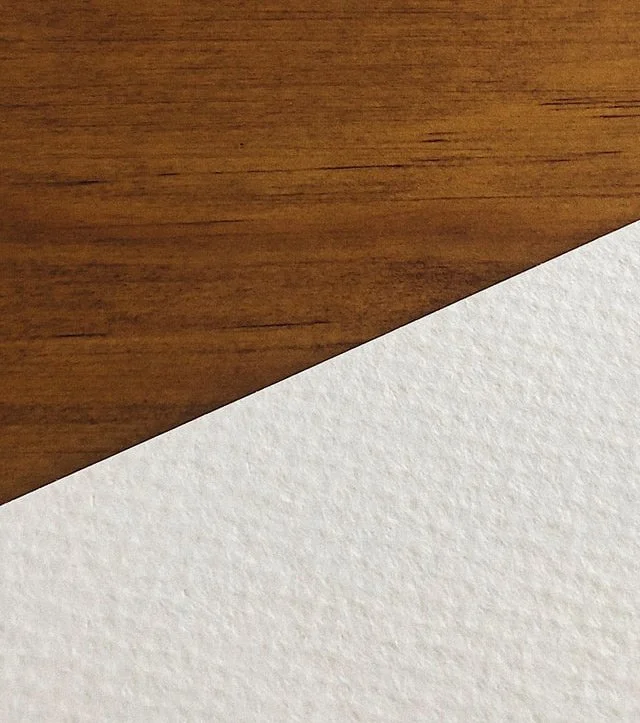
The process starts with the substrate, the underlying layer that provides structural support and a secure surface for mounting the objects being framed. Think of it as the backbone of the shadowbox, providing the foundation to which the frame is attached. Depending on the size, weight, and needs of the object, substrates can be made from a variety of materials, including foam core, Masonite, or plywood.
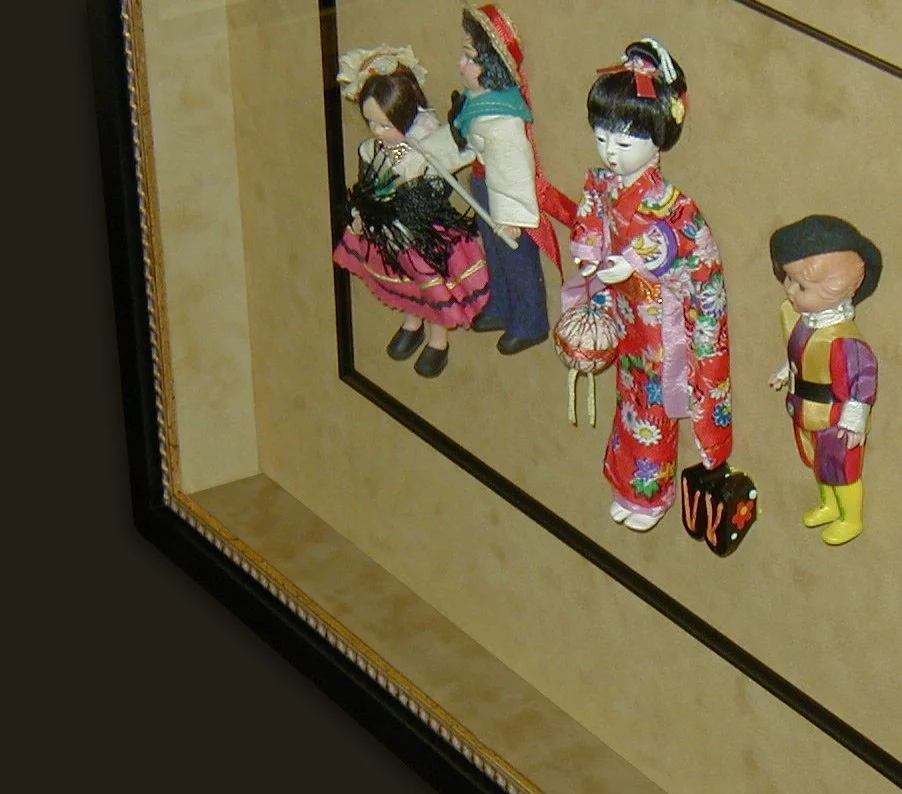
To create a finished appearance, the substrate is covered with a decorative background mat or fabric. Available in a wide variety of colors and textures, these finishes help complement the objects being displayed. Matting or fabric can also be extended along the inside walls of the shadowbox to create a clean, seamless appearance.
Once the background is in place, the objects are securely mounted to the substrate or mat. Depending on the item's size, weight, shape, and dimensions, this may involve a variety of techniques, including sewing, specialized tapes, screws, Mylar strips, acrylic fasteners, or even custom-built mounts. The goal is to secure each object safely and appropriately, using conservation-minded materials and methods whenever possible to help preserve it in its original condition.
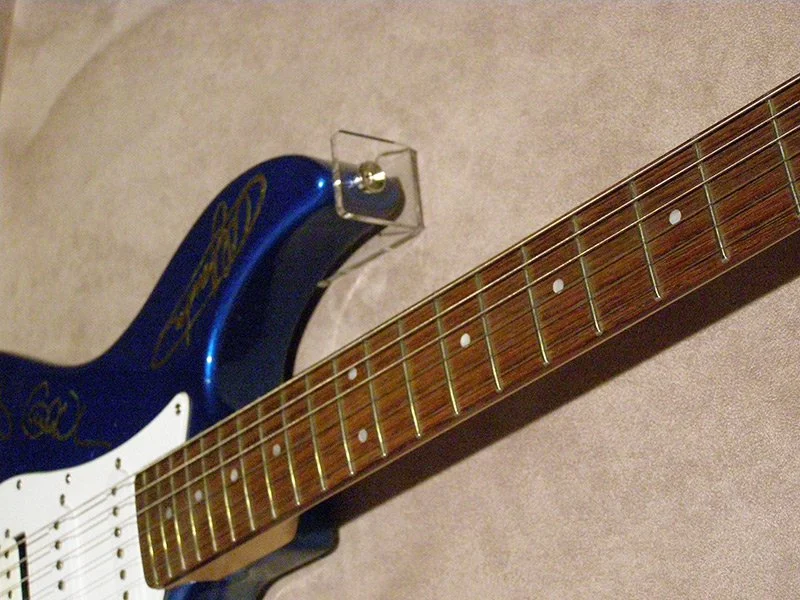
For example, this signed guitar was mounted using a custom-made L-shaped acrylic support. The support was secured to the substrate with screws and then attached to the guitar at its existing strap button, allowing it to be displayed securely without altering or damaging the instrument.
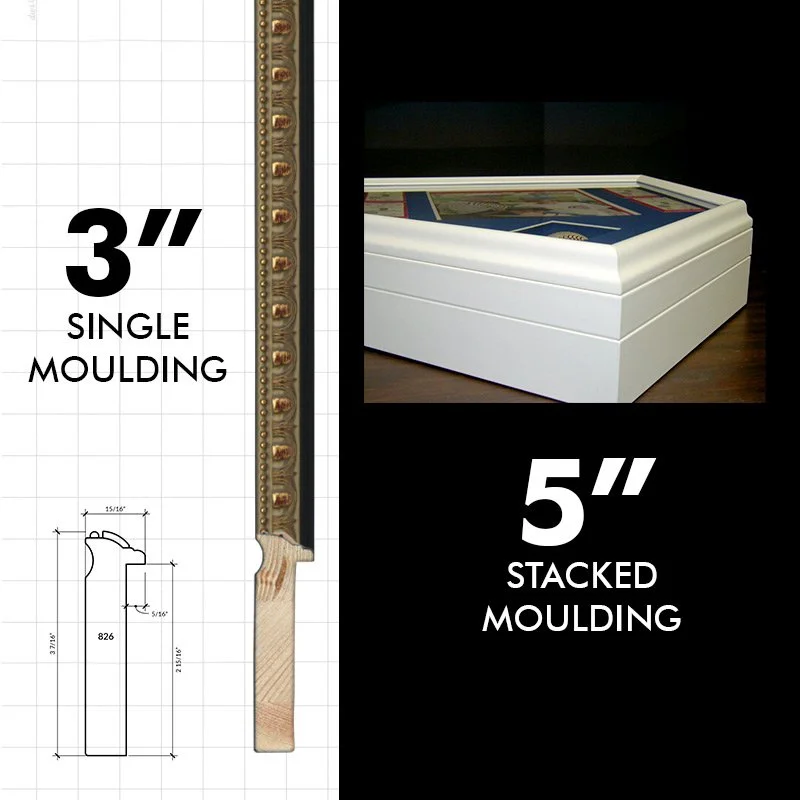
Ideally, a shadowbox is built using a single frame moulding deep enough to accommodate the objects being displayed, like the one shown here, which measures nearly 3 inches deep! However, mouldings this deep aren't always readily available. When a single moulding isn't deep enough, multiple mouldings can sometimes be stacked together to create the additional depth needed.
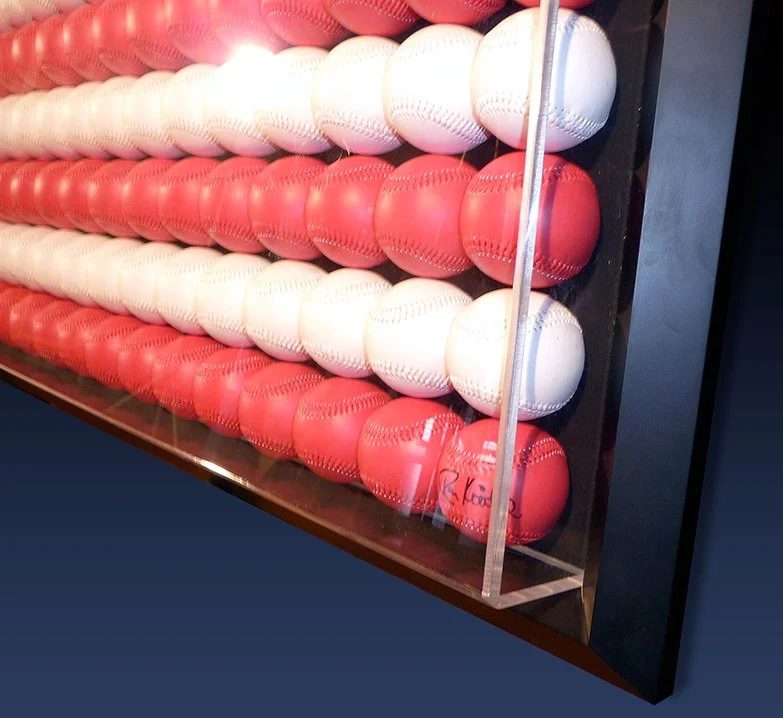
Have You Tried Acrylic?
Acrylic glazing is available with UV protection comparable to that of glass, helping protect your framed items from fading. Since shadowboxes are often larger and heavier than traditional framed artwork, acrylic may be a better choice for two important reasons:
Lighter weight: Acrylic weighs approximately half as much as glass. When you're dealing with a large shadowbox, that difference can be significant, making the finished piece easier to handle and hang.
Shatter resistance: Unlike glass, acrylic is much less likely to shatter. In the event of breakage, it is also less likely to cause damage to the objects inside or pose a safety risk.
With creative thinking, there is always a solution.
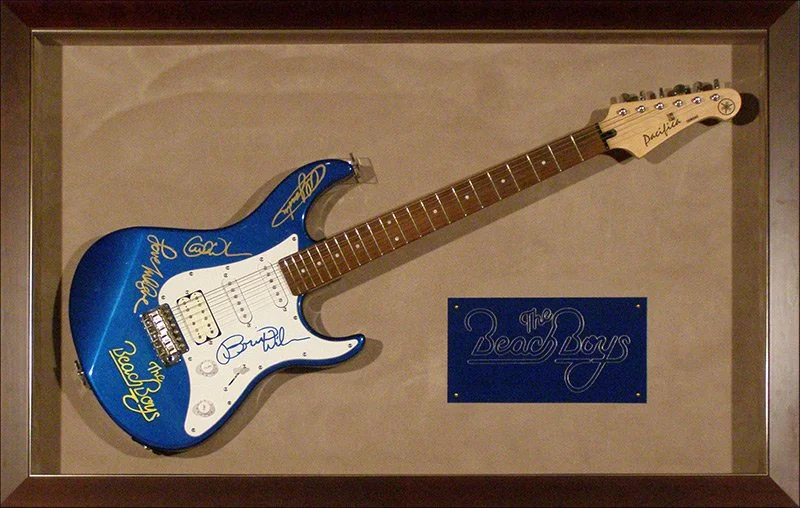
When you have a priceless guitar signed by the Beach Boys, you don't play it – you frame it! A sand-colored fabric mat was selected as a nod to Southern California, the band's home turf. A custom plaque, designed to echo the iconic Beach Boys logo, completes the presentation and adds visual weight to the overall design.
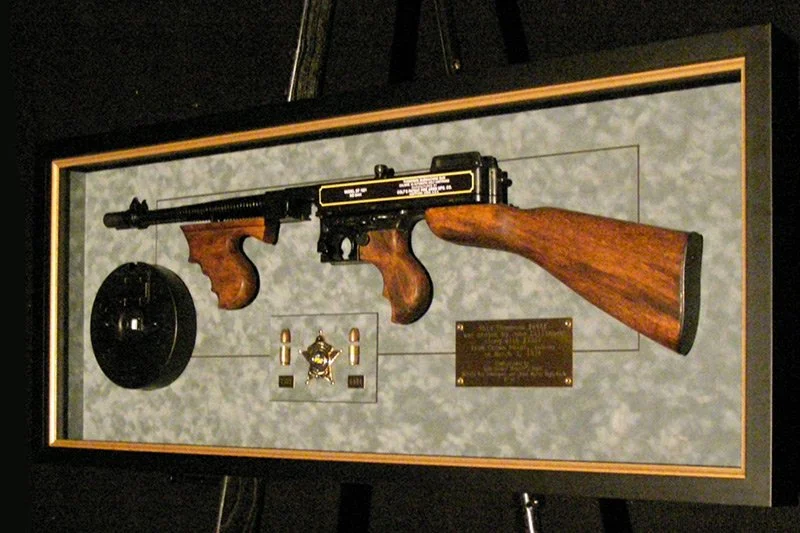
This Tommy gun is one of several replicas made for the 2009 film Public Enemies. To keep the finished display from becoming excessively large, the drum magazine was removed from the body of the gun before framing.
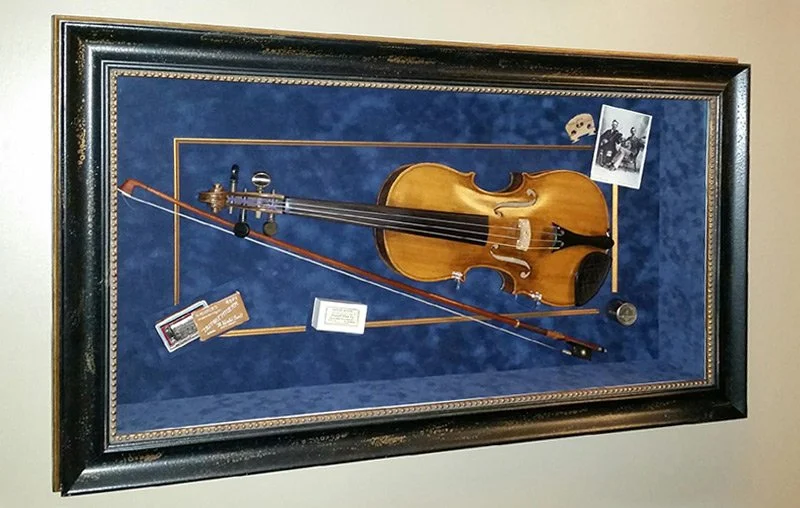
This 1870s fiddle is truly a treasure. A blue fabric mat was chosen to replicate the felt lining of its original case, creating a cohesive backdrop for the display. Everything found inside the violin case was carefully incorporated, along with a photograph of the owner. Custom acrylic mounts securely support the violin while allowing it to take center stage.
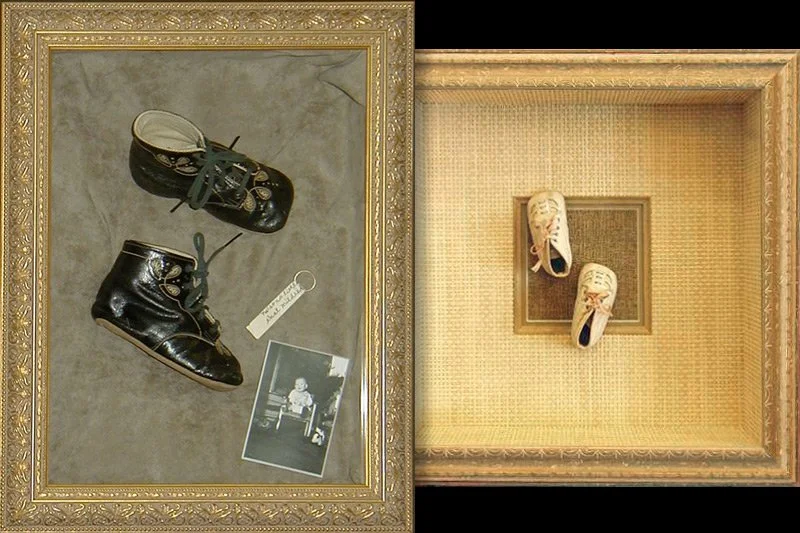
Forget bronzing baby shoes. Frame them instead! In the first example, a custom form was created to cradle the shape of the shoes, then covered in fabric to create a soft, blanket-like effect. In the second, stacked moulding provides the additional depth needed to accommodate the shoes and create a dimensional display.
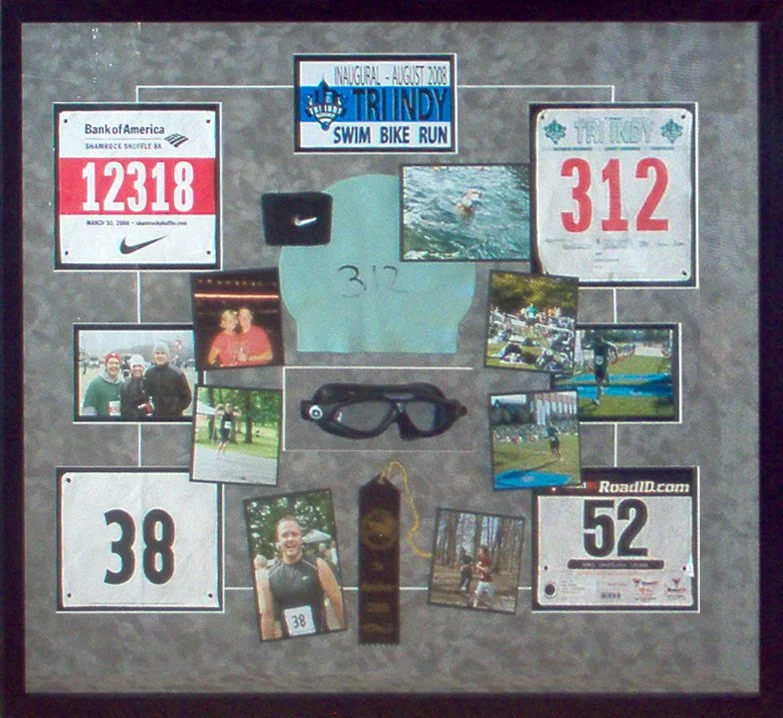
How Many Items Can You Put in a Shadowbox?
As many as you want! But don't go too crazy. You want just enough items to tell the story without overcrowding the display. Keep in mind that the more items you add, the larger (and heavier) the shadowbox may need to be.
With larger objects like the guitar or violin, you'll have plenty of negative space to work with, which can be a great opportunity to add supporting items. But don't add things just because you have the room. Sometimes one item says it all!
Anything can be framed!
Shadowboxes make great Christmas gifts – bring your special items in today.
Let us show you what we can do!
