Take a closer look at our custom framing!
One of the questions we hear most often is, “Why is custom framing expensive?”
The simple answer is that custom framing is exactly that: custom. Each frame is handcrafted specifically for your artwork, photographs, memorabilia, and design preferences. Unlike mass-produced frames, every component is carefully selected, measured, cut, and assembled to meet the unique needs of your piece.
However, the true value of custom framing goes far beyond customization. It comes from the quality of the materials, craftsmanship, and attention to detail that go into every project. Professional framing is designed not only to enhance the appearance of your piece, but also to help protect and preserve it for years to come.
In custom framing, details matter. From precise mat cutting and frame construction to conservation-grade materials and proper mounting techniques, every step contributes to the final result. Many of these details are not immediately visible, but they can have a significant impact on both the appearance and longevity of your framed piece.
The following are a few of the details that deserve a closer look, along with the important role they play in the quality of custom framing.
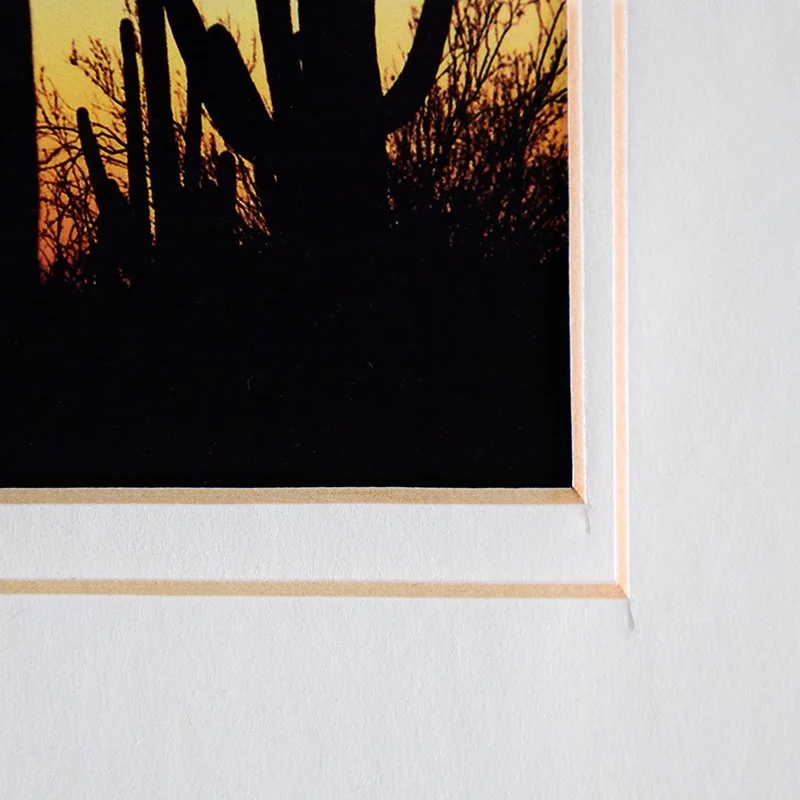
Notice the overcut corners on the mat opening? This occurs when the blade extends beyond the corner during the cutting process, leaving visible cuts that detract from the finished appearance.
Also note the darkened beveled edges of the mat. This discoloration is often caused by acids in lower-quality mat board. Over time, those acids can migrate into your artwork, photographs, or documents, causing staining and permanent damage.
To help protect your treasured pieces, always ask for acid-free matting. Acid-free materials are designed to preserve artwork and prevent the deterioration that can occur with standard paper mats.
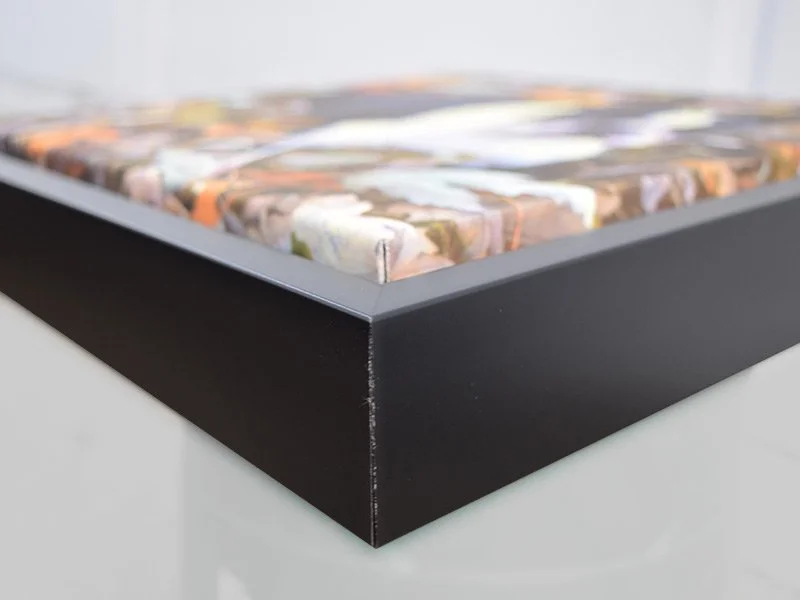
Notice the ragged edges at the frame corners? This can occur when the saw blade used to cut the moulding is dull. Instead of making a clean, precise cut, the blade tears the wood fibers, resulting in a rough, unfinished appearance.
You may also notice gaps where the frame corners meet. These gaps are often the result of inaccurate cuts, improper joining techniques, or warped moulding. Because corner joints are one of the most visible indicators of framing quality, even small imperfections can affect the overall appearance of the finished piece.
A professionally crafted frame should have tight, clean, and precisely aligned corners that fit together seamlessly. When choosing a framer, take a close look at the corner joints. Clean, gap-free corners are a hallmark of quality craftsmanship and can tell you a great deal about the care and attention that goes into every frame.
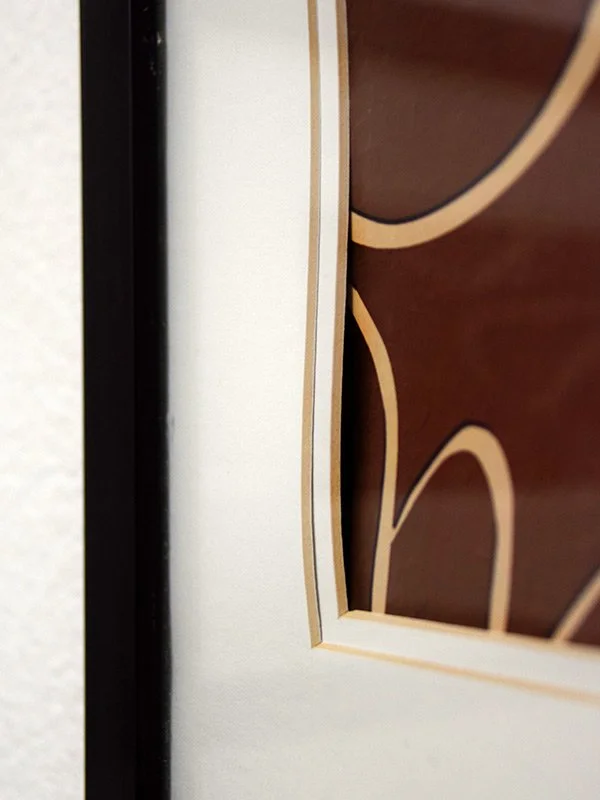

Notice the warped mat? This can happen when the mat is cut slightly too large for the frame and is forced into place. The pressure can cause the mat to buckle or bow over time. Warping can also occur when moisture finds its way into the frame package, affecting the mat board and other materials inside.
When inspecting a frame, take a look at the back. Is there a dust cover, also known as backing paper? A properly applied dust cover helps seal the frame package and reduce the amount of dust, moisture, and airborne particles that can get inside. It can also help protect against insects that may damage paper-based artwork, photographs, or documents.
These are the kinds of details that are not always visible from the front, but they play an important role in protecting and preserving what is inside the frame. When choosing a framer, ask about their backing and sealing process to ensure your piece is properly protected.
Notice faded artwork? This often happens when the glass used to protect the piece does not include UV filtering, allowing harmful ultraviolet rays to pass through and gradually damage the colors and materials over time.
Is glare getting in the way of enjoying your art? Standard glass can create reflections that distract from the piece and make it difficult to view in certain lighting conditions. Fortunately, there are glazing options designed to reduce or even eliminate glare while still providing excellent clarity and protection.
When choosing glass for your framing project, ask for UV-filtering and anti-glare options to help preserve your artwork and keep it looking its best for years to come.
All of these issues can easily be avoided.
All it takes is a little more time, attention to detail, and quality materials. Our professional framers bring years of experience to every project, ensuring each piece is crafted with care and precision.
With our approach to custom framing, you won’t see these common issues. We take pride in doing the work the right way because we care about your art and its long-term preservation.
Bring your piece in today and let our designers help you create a frame that protects, enhances, and lasts.

Conservation / Preservation Grade Materials
Because we want your art and heirlooms to last a lifetime without discoloration, damage from adhesives, or damage caused by outgassing from non acid-free materials, we use only the highest quality conservation and preservation-grade materials for your projects.

Quality & Design
Quality may not be the first thing you notice, but it is just as important as design. We use acid-free, 100% cotton rag mats and UV-filtering glass, and many of our frames are hand-finished solid wood.
Design is usually what people notice first, and it is also an important part of the experience. Our designers work with you to create the best possible presentation for your piece, balancing style, materials, and long-term preservation.
